

If you just had a tooth pulled, or you know one is coming out soon, the gap it leaves behind is probably already on your mind. Getting a dental implant after tooth extraction is one of the most common ways to replace a missing tooth permanently, but the timeline looks different for every patient. Some people can have the implant placed the same day as the extraction. Others need to wait months. Here is what actually determines which category you fall into.
Some patients can receive a dental implant the same day as their extraction. Others need to wait several weeks or months depending on bone condition, gum health, infection, and whether a bone graft is required. There is no single waiting period. Your dentist determines the right timing after evaluating the extraction site and your overall oral health.
Same-Day Implants: When They Work and When They Don’t
Immediate implant placement, placing the implant into the socket during the same appointment as the extraction, is a real option, but it only works under specific conditions.
For same-day placement to be on the table, the surrounding jawbone needs to be intact enough to hold the implant securely. The gum tissue should be healthy, and the extraction site should be free from active infection or heavy inflammation. If the implant cannot be seated with adequate stability, placing it anyway creates more problems than it solves.
One thing worth clarifying: getting the implant on the same day as the extraction does not mean you leave with a finished tooth. The implant still needs time to fuse with the bone before the final crown goes on. That healing process, called osseointegration, takes months regardless of when the implant is placed.
The Three Timelines for Dental Implant After Tooth Extraction
Most implant treatment after an extraction falls into one of three categories. Which one applies to you depends on what the extraction site looks like and what your bone and gums need.
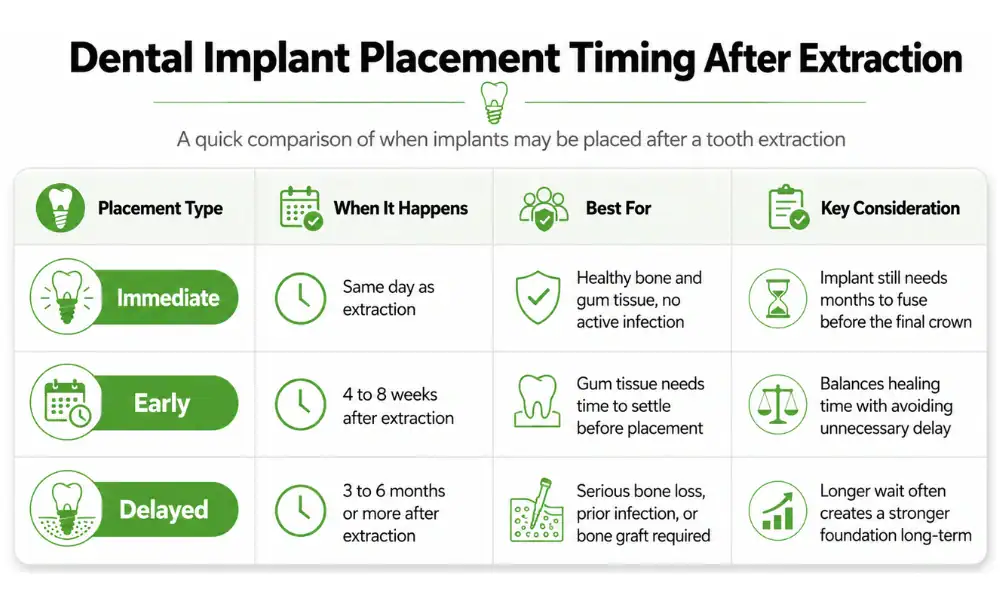
Immediate placement reduces the number of separate appointments but does not skip the healing phase. Early placement gives the gum tissue time to close over and the initial inflammation to settle, while avoiding a longer delay than necessary. Some dentists prefer this approach because the soft tissue is more stable without requiring a full healing period. Delayed placement is not a setback. Sometimes it genuinely creates better conditions for the implant to succeed long-term.
What Actually Determines Your Timeline
Two patients can have the same tooth extracted by the same dentist and walk out with completely different treatment plans. That is because the implant timeline depends on several factors that vary from person to person.
Jawbone volume is the most critical factor. Dental implants are anchored in bone, so if there is not enough healthy bone at the extraction site, the implant has nothing solid to hold onto. Teeth that have been damaged for a long time, or that had extensive decay or infection, often leave behind a site with compromised bone. In those cases, bone grafting may be recommended before the implant is placed. [internal link: bone grafting service page]
Infection at the extraction site changes the picture considerably. Active infection does not automatically rule out implants, but it does affect timing. Your dentist needs to confirm the infection has cleared before placing anything into that bone.
Gum health matters more than most patients expect. Gum disease around the extraction site needs to be addressed before implant placement. Placing an implant into tissue affected by periodontal disease puts the implant at risk from the start.
Tooth location also plays a role. A front tooth carries cosmetic considerations that a back molar does not. The bite forces on a rear molar are higher, which affects how the implant needs to be planned and when loading it with a restoration is appropriate.
For a full breakdown of how implants work and what the placement process involves, the American Academy of Implant Dentistry provides patient-facing resources worth reviewing.
If You Need a Bone Graft First
Bone grafting sounds more complicated than it usually is. When a tooth has been missing for a while, or the bone around an infected tooth has deteriorated, a graft helps rebuild the volume needed to place an implant securely.
In many cases, the graft is placed at the time of extraction. This is called a socket preservation graft. The dentist packs material into the empty socket immediately after the tooth is removed to help maintain bone volume while the area heals. This adds healing time before the implant can be placed, typically three to six months, but it also sets up a more stable foundation for the implant down the line.
Needing a bone graft does not mean implants are off the table. It means there is one more step before the implant goes in. [internal link: dental implant treatment page]
Living With the Gap While You Wait
Patients often worry about walking around with a visible space, especially when the missing tooth is toward the front of the mouth. Depending on your situation and treatment plan, temporary options may be available to fill the gap while the extraction site or implant heals.
What works depends on where the tooth is and what stage of treatment you are in. Your dentist can walk you through what is appropriate for your case and how a temporary solution fits into the overall plan without interfering with healing. [internal link: restorations or temporary teeth page]
Why It Is Worth Discussing Implants Before the Extraction
If you already know a tooth needs to come out and you are thinking about an implant, bring it up before the extraction happens. When your dentist knows an implant is part of the plan, they can make decisions during the extraction that preserve more bone and set up a better site for future placement.
This does not commit you to anything. It just means the extraction is done with the next step in mind, rather than treating the procedures as two separate events with no connection.
What to Know Before Your First Consultation
At an implant consultation, your dentist will examine the extraction site, assess the bone and gum tissue, review your health history, and likely take imaging to get a clear picture of what is there. From that evaluation, they can tell you whether immediate, early, or delayed placement makes the most sense and what the full treatment sequence will look like from extraction to final crown.
The consultation is also the right time to ask about temporary tooth options, bone grafting, and a realistic timeline for completing treatment. Going in with those questions ready makes the appointment more useful.
There Is No Universal Timeline, But There Is a Right One for You
The waiting period between a tooth extraction and a dental implant is not a fixed number. It is a decision based on bone, tissue, infection history, overall health, and what the extraction site actually looks like once the tooth is out.
Some patients are good candidates for same-day placement. Others do better with weeks or months of healing first. What matters is that the timing is based on the conditions in your mouth, not on a general rule or a preference for speed.