

Your business has a website. Maybe it even looks sharp. But if there’s no blog on it, you’re handing a measurable slice of your potential clients over to competitors who do have one – and most of those clients will never even know you existed. A business blog in 2026 doesn’t just attract readers. It feeds the AI tools, search engines, and recommendation systems that your customers are using to decide who to hire before they ever pick up the phone.
What a Blog Actually Does for Your Business in 2026
A business blog does two things at once. First, it gives Google more pages to rank – which means more chances for your website to appear when a potential client searches for something related to what you do. Second, and this is the part most people miss, it gives AI tools like ChatGPT and Google’s AI Overviews something to pull from when someone asks those tools for a recommendation.
Blog content is the number one page type cited in Google AI Overviews. That means when someone asks Google a question and gets an AI-generated summary at the top of the results page, the sources being quoted are almost always blog posts. If your business doesn’t have any, it simply doesn’t exist in that conversation.
The other thing worth knowing: visitors who arrive at a website through an AI-generated recommendation convert at a dramatically higher rate than typical organic visitors. These people didn’t just stumble onto your site – they were specifically directed to you by a tool they already trust. That’s a warmer lead than most paid ad campaigns produce.
“But My Customers Don’t Read Blogs”
This is the most common pushback, and it’s worth addressing directly because it’s based on a misunderstanding of how a blog actually works.
You’re right that most people don’t sit down and read business blogs for entertainment. That’s not the point. Here’s what’s actually happening: your potential clients are typing questions into Google, or asking ChatGPT, or using Perplexity to research their options before they make a decision. When they do that, the answers those platforms give come from somewhere. That somewhere is blog posts.
Think about it from the buyer’s side. A marketing manager at a growing company needs SEO help. She doesn’t Google “SEO agency” and scroll through service pages. She asks ChatGPT something like “what should I look for in an SEO agency” or “how long does SEO take to work.” The answer ChatGPT gives her cites articles. If your business has written a clear, helpful article on that topic, there’s a real chance your name shows up. If you haven’t, it won’t.
So the question isn’t whether your customers read blogs. It’s whether your business is showing up in the places your customers are going to find answers.

The Compounding Argument That Paid Ads Can Never Match
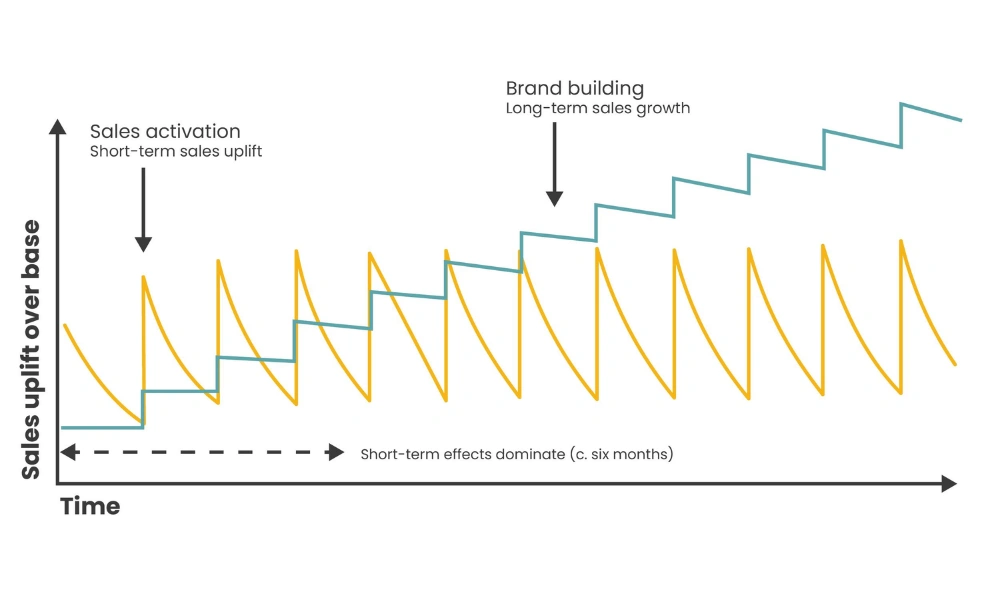
Run an ad campaign and you get traffic while the campaign runs. Stop paying, and the traffic stops. That’s the deal with paid advertising – it works, but it has no memory. The moment the budget dries up, so does the visibility.
A blog post works differently. A well-written, keyword-targeted article published today can still be generating traffic and AI citations two years from now. It doesn’t clock out. It doesn’t need a budget renewal. Over time, a library of good blog content becomes one of the most durable marketing assets a business can own.
This compounding effect is particularly strong for businesses in competitive markets. When a potential client finds three different blog posts from your site answering questions they had about your industry, they don’t just see a vendor – they see someone who actually knows what they’re talking about. That perception is built through the blog, before the sales conversation ever starts.
What Happens to Businesses That Skip the Blog
There’s a real cost to not having a blog, and it’s worth being specific about what that looks like.
Your service pages cover what you do and how to contact you. That’s useful for people who already know they want what you offer. The problem is that most potential clients aren’t that far along in their decision. They’re asking questions, comparing options, trying to figure out whether they even need what you sell. If your website has nothing to offer at that stage of the decision-making process, those people pass through and find a competitor whose website does.
The other cost is more recent. With AI Overviews now appearing in roughly one in four Google searches, and with tools like ChatGPT handling billions of questions every month, the traffic that used to come through traditional search results is increasingly being filtered through AI-generated answers. Businesses without blog content have no presence in those answers. That’s not a hypothetical future risk – it’s a gap that’s already widening.
What Makes a Business Blog Actually Work
A blog that works isn’t just a collection of articles. It’s a library of answers to the specific questions your potential clients are asking, written clearly enough that both a human reader and an AI system can extract a useful response from them.
The posts that perform best in 2026 are ones that open with a direct answer to the question being asked, then expand with practical explanation and real-world context. Search engines and AI tools both reward content that gets to the point quickly. A post that takes three paragraphs to warm up before saying anything useful loses readers and gets passed over by AI citation systems.
Topic consistency matters too. A business that publishes five articles covering different angles of the same core subject builds what’s called topical authority – the signal that tells Google and AI tools that this website genuinely covers this area in depth. That signal compounds over time and makes each new article easier to rank than the one before it.
Frequency is less about volume and more about reliability. Publishing one genuinely useful, well-researched post per month consistently outperforms publishing ten mediocre posts in a burst and then going quiet for six months. Consistency is what builds momentum.
The Trust Factor That Service Pages Can’t Replicate
Before someone spends money with a business they haven’t worked with before, they need to trust that business. A service page can list credentials and client logos. A blog does something harder to fake: it shows how the business thinks.
When a potential client reads an article your business wrote about a problem they’re dealing with, and that article is clear, specific, and genuinely useful, something shifts. They start to feel like they already know you. The sales conversation that follows isn’t starting from zero – it’s picking up where the article left off. That’s a fundamentally different situation than a cold inquiry off a service page.
This matters more for service businesses than almost anyone else. If you’re selling a product, a customer can assess it before buying. If you’re selling a service, they’re buying your judgment and your ability before they have any direct evidence of it. A blog is the clearest way to give them that evidence in advance.
If Your Website Isn’t Showing Up, Digital Ranking Solutions Can Help
If your website is not showing up when potential clients search for what you do, Digital Ranking Solutions can fix that. Their SEO content writing service produces keyword-researched blog posts built to rank and bring in consistent organic traffic. Reach out at digitalrankingsolutions.com and find out what a targeted content strategy could do for your business.
Frequently Asked Questions
Does my business really need a blog if we get most of our clients through referrals?
Referrals are great – but they have a ceiling. A blog expands beyond your existing network by making your business discoverable to people who have never heard of you. It also gives referral sources something concrete to point to when recommending you. “Check out their website, they’ve written a lot about this” is a stronger referral than a name and a number.
How long does it take for a blog post to rank on Google?
Most blog posts start gaining meaningful organic traffic between three and six months after publication, assuming the keyword targeting is solid and the content quality is there. Some posts rank faster, some slower, depending on competition for the keyword. The key thing is that once a post ranks, it tends to stay ranked – unlike paid traffic, which disappears when you stop paying for it.
Do I need to post new blogs every week for it to work?
No. Consistency matters more than frequency. One well-researched post per month, published regularly over twelve months, will outperform an irregular burst of posts followed by months of silence. Google and AI tools reward websites that publish reliably, not necessarily often.
What’s the difference between a blog post and a service page?
A service page tells people what you do and how to hire you. A blog post answers a question your potential clients are already asking before they’ve decided to hire anyone. Both serve different stages of the buyer’s journey. Service pages capture people who are ready. Blog posts capture people who are still deciding – and there are far more of those.
Can a small business compete with larger companies through blogging?
Yes, and often more effectively than through paid channels. Larger companies frequently publish generic content because it scales easily. A smaller business that writes with real specificity about the problems their actual clients face can rank above much larger competitors on the right search terms. Google doesn’t rank company size — it ranks content quality and relevance.